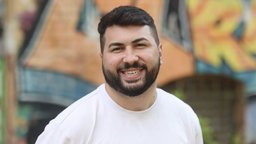
Mini Study Visit 2026 in Berlin: Eindrücke von Teilnehmenden aus fünf Ländern
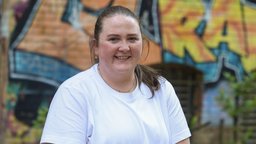
Louise aus Irland
"I found the Sport 365 project very inspiring. To see that number of people engaging in sport and physical activity in a local shared space was fantastic. I like how it has grown organically and the facilities on offer reflect what participants are looking for. It was a brilliant project and I would love to see something similar in Dublin some day!"
Louise
What is your name and where are you from?
Louise Callan, Ireland (I work for Dun Laoghaire Rathdown Sports Partnership)
What has been your most valuable learning experience during this study visit?
The most valuable learning experience for me has been seeing how local organisations such as Alba basketball "Sport Vernetzt" project it was fascinating to see how a professional club can have such an impact on school and community based sport and how it is expanding across Germany. It is a great model that can be copied. It highlighted that strong partnerships are just as important as the activities themselves in creating sustainable impact.
Was there a project, organisation, or activity that particularly inspired you? Why?
I found the Sport 365 project very inspiring. To see that number of people engaging in sport and physical activity in a local shared space was fantastic. I like how it has grown organically and the facilities on offer reflect what participants are looking for. It was a brilliant project and I would love to see something similar in Dublin some day!
What is one idea or practice you would like to take back to your own organisation?
One key idea I would take back is developing a more structured local partnership network, where schools, youth services, and sports clubs meet regularly to plan joint initiatives. This could help avoid duplication and create more pathways for young people to stay involved in sport.
How has this visit changed or strengthened your understanding of social inclusion through sport?
This visit has strengthened my understanding that inclusion doesn’t happen through sport alone it requires intentional collaboration, outreach, and relationship-building. It highlighted that you don’t need huge resources to get something off the ground.
Can you share a moment of the study visit that made a strong impression on you?
A strong moment for me was hearing directly from participants and project leaders about how partnerships evolved over time and the progress from participant to providers. It showed that trust and consistent communication are key to building successful collaborations.
What similarities or differences have you noticed between the approaches in Berlin and those in your own country?
A key similarity is the shared goal of increasing participation and inclusion using sport as a social activity and not just competitive training etc.
Which discussion or exchange with other participants has been most meaningful for you?
The most meaningful exchanges were with other participants working in youth engagement, where we shared challenges around retaining young people in sport. These conversations led to great idea-sharing and opened possibilities for future collaboration and exchange visits.
What new partnership or collaboration opportunity emerged for you during this event?
This experience will influence me to focus more on building strategic relationships alongside programme delivery. I’ll continue to place an emphasis on co-designing projects with partners and young people it really opened my eyes to the possibilities that come with Erasmus+ funding!
How do you think the experiences from this study visit will influence your future work with young people or sports programmes?
I think the visit has highlighted that we may be in different countries but the work we are doing and the goals we have are very similar and that there’s always opportunities to network, troubleshoot and borrow ideas from others even if they are not working in the exact same field as you.
If you had to describe this study visit in three words, which words would you choose and why?
Really great ideas!!!
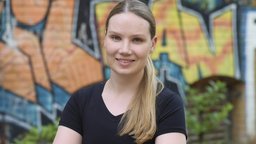
Anu aus Finnland
"I would like to adopt the idea of neighborhood-specific, open-air, and grassroots sports initiatives to foster the sence of belonging."
Anu
Anu
What is your name and where are you from?
Hi! I’m Anu and I come from Finland.
What has been your most valuable learning experience during this study visit?
My most valuable learning experience was understanding that the power of social sport lies in its ability to break down cultural barriers and foster a sense of belonging for participants of all backgrounds.
Was there a project, organisation, or activity that particularly inspired you? Why?
I was really inspired by the SpOrt365 community and the low threshold activities they offer for all who are interested in building a sense of community.
What is one idea or practice you would like to take back to your own organisation?
I would like to adopt the idea of neighborhood-specific, open-air, and grassroots sports initiatives to foster the sence of belonging.
How has this visit changed or strengthened your understanding of social inclusion through sport?
I gained new understanding of the phenomena of social sport in a new cultural context.
Can you share a moment of the study visit that made a strong impression on you?
I would again mention the visit to SpOrt365 park - very impressive!
What similarities or differences have you noticed between the approaches in Berlin and those in your own country?
In Finland and especially the countryside where I’m from we do not face the same challenges as they do in big cities. But sport as a tool for social inclusion and belonging is important nonetheless.
Which discussion or exchange with other participants has been most meaningful for you?
I learned a lot from the participants of different countries but I do also think that it was beneficial to mingle with other Finns that I would not met otherwise.
If you had to describe this study visit in three words?
Interesting, eye-opening and fun.
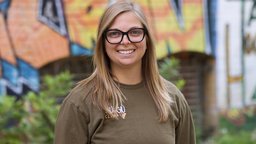
Lorenza aus Italien
"I learned that limits often exist only in the eyes of the beholder. We need to roll up our sleeves and take action."
Lorenza
What is your name and where are you from?
I’m Lorenza and I’m from Finale Ligure, Italy. Finale Ligure, known as the “capital of outdoor sports”, sits in the Italian region of Liguria. Overlooking the shores of the Ligurian sea and neighboring France, Finale offers a variety of outdoor activities that can be enjoyed year-round. It is internationally renowned as a destination for mountain biking and rock climbing, with hundreds of trails and sea-facing cliffs. The area is also popular among trail runners, road cyclists, scuba divers, surfers, and windsurfers. I collaborate with Supergiù which is a registered Amateur Sports Association (Associazione Sportiva Dilettantistica). The association operates a gym that promotes sport as a tool for psychophysical development, with a particular focus on sport climbing and outdoor activities. Supergiù is dedicated to engaging local youth; it serves approximately 350 active members, including over 100 under-18 participants enrolled annually in its sport climbing courses.
What has been your most valuable learning experience during this study visit?
My most valuable takeaway is that when you truly want to achieve something, there are no real limits. Motivation and determination can break down any wall or boundary. If you keep an open mind, the world opens up to you. This experience proved once again that community and grassroots associations are the ultimate demonstration that unity is strength. There are far more beautiful, supportive people out there than we often think. It is a continuous cycle of giving and receiving, where everyone feels useful and appreciated, leading to collective results that are far greater than anything a single individual could ever achieve alone. I learned that limits often exist only in the eyes of the beholder. We need to roll up our sleeves and take action. It won’t always be easy, and sometimes we shouldn't just follow logic or rationality—we need to follow our hearts, because passion is the most valuable currency we have in social work. Was there a project, organisation, or activity that particularly inspired you? Why? Every project we visited sparked meaningful reflections, but what moved me the most on an emotional level was hearing Chiara speak. She was deeply touched while sharing stories of small gestures that some might find irrelevant, but which actually had a massive impact on vulnerable people—like a man who proudly painted a flag for a school group coming to visit the association, this project made him feel deeply involved and useful to the world. ALBA Berlin was also incredibly inspiring. Seeing such a prominent, professional club choose to invest so heavily in social inclusion made me realize how much humanity we need in sports. Being a top-tier player does not exclude social responsibility; in fact, elite sports can be the perfect launching pad for meaningful social change.
What is one idea or practice you would like to take back to your own organisation?
Inspired by ALBA Berlin, I want to build stronger, deeper networks within our local territory, specifically with schools, social services, and the municipality. I want to loudly promote the message that movement is well-being and connection. We need to counter the toxic "all-or-nothing" performance narrative. It is perfectly okay to be average at a sport, have fun, cooperate, and develop life skills. This holds just as much value as winning or performing to prove something to someone. There are different ways to win. Just the other day, I saw a youth cooperative ball game where a child literally snatched the ball out of his own teammate's hands just to shoot and win the game. Looking at the children's faces, it was clear that winning like that didn't feel good. The team spirit was crushed. I want to bring back a sports culture where teamwork matters more than the final score. Another massive source of inspiration was seeing ALBA Berlin’s digital platform, the Albathek. For a very long time, I have had this personal dream of gathering all the specific games and educational activities I have adapted, designed, and created for children's climbing courses. I want to collect and categorize them systematically by duration, target age, required equipment, and specific psychological or physical skills developed. I would love to bring this project to life at ASD Supergiù, and I am highly motivated to explore how we can fund and develop it—whether through future European projects, local grants, or new international collaborations. This study visit gave me the spark to believe it is truly possible.
How has this visit changed or strengthened your understanding of social inclusion through sport?
The reflection that the ALBA Berlin team guided us through regarding our own sports biographies was powerful. A certain demographic is exposed to sport and movement from childhood, while poorer or less-educated families often miss out on understanding its importance , or simply lack the financial means to afford it, causing children to lose a crucial aspect of their development. Because sport was always part of my weekly routine growing up, my mindset is structured to always carve out time for it as a precious space for self-care and release. Conversely, the newer generations are increasingly sedentary; at the very first sign of physical effort, they tend to give up. This triggers a domino effect, leading to low self-esteem and a limited sense of self-efficacy. Movement creates a sense of belonging, trust, and connection—both with oneself, with others, and with the environment. Proprioception and self-awareness are the foundation of well-being. So yes, sport is for everyone, but to truly reach everyone, we must emphasize its social value from the very beginning of an individual's development.
Can you share a moment of the study visit that made a strong impression on you?
I was absolutely amazed when we visited the community sports facility. Seeing a completely free, well-managed, and well-maintained facility with a massive variety of sports was incredible. I was deeply struck by the humility of the American coordinator, who explained how they recycle everything because they lack funds, making use of whatever comes their way. Maintaining such a thriving, positive space in a historically disadvantaged neighborhood acts as a true urban rehabilitation. It is a completely democratic, judgement-free environment where no barriers exist based on race, gender, age, or background. Everyone can freely access the services, enjoy the open spaces, and practice sports. The well-being this facility generates far outweighs its structural costs. It made me realize that municipalities should fund more of these aggregation spaces to foster friendships, cultural exchange, and true social integration.
What similarities or differences have you noticed between the approaches in Berlin and those in your own country?
There are significant structural differences. It is obviously difficult to compare a massive capital city like Berlin to a small Italian town of 11,000 inhabitants. The financial resources and the structure of the social network are completely different. However, we share very similar social challenges: high rates of integration needs for immigrants and families facing economic hardships that prevent children from participating in sports. What completely shifted my perspective in Berlin was seeing that the local associations don't sit around waiting for people to come to them—they actively go out into the community. This is what I most want to bring home: the drive to proactively network, take the initiative, and propose collaborative projects to schools, social services, and our municipality. I would love to structure a format where wealthier families can support families in need, not just financially, but through human exchange—like organizing carpools for practices to optimize everyone’s time and energy.
Which discussion or exchange with other participants has been most meaningful for you?
My exchanges with Kemal and Bali were the most meaningful; both have an incredible drive to give back to others and a deep trust in humanity. I asked Kemal how they manage communication and respect in such large-scale projects, and what specific tools they use when dealing with youth who might trigger conflicts, lack role models, or don't even realize they are disrupting others. With all the gentleness and patience of a dedicated social worker, he told me: "You have to repeat things many times and never take anything personally." He reminded me that what people do or say is usually just a reflection of their own reality. By separating a person's behavior from their identity, you protect yourself from useless frustration and burnout. With Bali, I felt an immediate connection because we share the exact same drive: the hunger to give our best, leave a positive mark, and contribute to the community. I also absolutely loved his pure passion for basketball—he literally carries his ball and shoes everywhere just to be ready to play.
What new partnership or collaboration opportunity emerged for you during this event?
While I didn't find an immediate partner for a direct project within my specific working group, a promising door opened through Chiara Polacchini’s project, SIB (Social Inclusion Berlin). Furthermore, I connected deeply with Mark from Zagreb, a participant from a parallel European project happening at the same time, whose project ideas align with mine. Additionally, Leonie Stokolossa, from the organizing national agency JUGEND für Europa, had some great contacts to share with me to help develop my project concept further.
How do you think the experiences from this study visit will influence your future work with young people or sports programmes?
It will influence 100% my future work with young people and sports programmes . As an educator, I felt I was already wearing "educational glasses" and looking at sports through a social lens. However, this study visit allowed me to reflect much more deeply on the impact I can make. Instead of keeping social work and sports as separate, ordinary sectors, I want to bridge them completely. I am excited to propose climbing activities specifically tailored for vulnerable youth, unlocking the immense social potential that our sports facility can offer the community.
If you had to describe this study visit in three words, which words would you choose and why?
• Inspirational: Because it completely shifted my perspective on what is possible in grassroots sports.
• Community-oriented: Because every single project we saw placed the human being and the neighborhood at the very center.
• High quality: Because the level of organization, methodology, and passion gave a profound sense of purpose to everything we did.

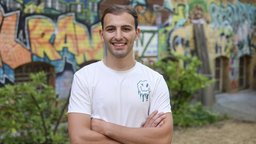
Daniel aus Malta
"One idea I would like to take back to my organisation is the concept of free and inclusive community sports sessions, similar to what I observed at Park 365. This approach encourages participation from all young people, regardless of their background or ability level, and focuses on creating a safe and social environment rather than competition."
Daniel
What is your name and where are you from?
My name is Daniel Cassar and I am from Malta.
What has been your most valuable learning experience during this study visit?
The most valuable learning experience during this study visit was the field visits to real projects in Berlin, where I could see how sport is used in practice to promote social inclusion. Observing initiatives such as ALBA Berlin and community-based sports spaces helped me understand how structured programmes and open-access facilities can engage young people and support different social groups.
Was there a project, organisation, or activity that particularly inspired you? Why?
A project that particularly inspired me was Park 365, as it showed how a public space can be transformed into an inclusive sports area accessible to everyone. The fact that it offers multiple facilities such as basketball, football, and other activities free of charge makes it easy for people of all backgrounds to participate and stay active. I found it inspiring because it promotes not only physical activity but also social interaction and community building, especially for young people who may not have access to organised sports. It demonstrated how simple and open spaces can have a strong positive impact on inclusion through sport.
What is one idea or practice you would like to take back to your own organisation?
One idea I would like to take back to my organisation is the concept of free and inclusive community sports sessions, similar to what I observed at Park 365. This approach encourages participation from all young people, regardless of their background or ability level, and focuses on creating a safe and social environment rather than competition.
How has this visit changed or strengthened your understanding of social inclusion through sport?
The visit strengthened my understanding of social inclusion through sport by showing how it can be applied in real-life situations, not just in theory. Seeing projects in Berlin helped me realise that sport can create safe, inclusive spaces where people from different backgrounds can connect, participate, and feel a sense of belonging.
Can you share a moment of the study visit that made a strong impression on you?
One moment that made a strong impression on me was visiting Park 365, where I saw how a simple public space was transformed into an open and inclusive sports area. Seeing people freely using the facilities, playing together, and socialising showed how sport can naturally bring communities together.
What similarities or differences have you noticed between the approaches in Berlin and those in your own country?
One similarity I noticed is that both in Berlin and in my country, sport is used to bring young people together and promote teamwork and participation. In both contexts, organisations organise activities such as football and community sports events to engage youth. However, a key difference is that in Berlin there is a stronger focus on open and accessible public sports spaces, such as Park 365, where anyone can participate freely. In my country, activities are more often organised through structured groups or events, with less emphasis on freely accessible, everyday community spaces.
Which discussion or exchange with other participants has been most meaningful for you?
One of the most meaningful exchanges for me was discussing how different countries approach sports engagement, especially compared to Malta. Many participants explained that in their countries, there is a stronger focus on making sport freely accessible and open to everyone, often through public spaces and community initiatives. This was interesting for me because in Malta, sports participation is more often organised through structured groups or specific events.
How do you think the experiences from this study visit will influence your future work with young people or sports programmes?
The experiences from this study visit will influence future work by encouraging a stronger focus on inclusion, accessibility, and participation in sports activities. It highlighted the importance of creating safe and welcoming environments where young people from different backgrounds feel comfortable to take part. It also provided practical ideas that can help improve how sports programmes are organised, making them more open, community-based, and focused on social development rather than only competition.
Three words to describe this study visit are:
Inclusive – Practical – Inspiring
Bali aus Deutschland
"I would like to take back the idea of viewing sport as a connected and holistic system. Sport can take place in many different settings: kindergartens, schools, sports clubs, public sports facilities, and leisure spaces. By connecting these environments and working together, we can create better opportunities for children and young people and support their development in a more comprehensive way."
Bali
What is your name and where are you from?
My name is Bali Kayali, and I am from Siegen, North Rhine-Westphalia, Germany.
What has been your most valuable learning experience during this study visit?
My most valuable learning experience was understanding how sport can contribute to solving social challenges. Sport is often associated with competition and performance, but this study visit showed me that it can be much more than that. Sport can bring people together, connect different communities, and create opportunities for social inclusion. It can be a powerful tool for addressing social issues and strengthening communities.
Was there a project, organisation, or activity that particularly inspired you? Why?
I was especially inspired by ALBA Berlin and its overall approach. What impressed me most was the idea that while they may discover one exceptional athlete among a thousand young participants, they also focus on the other 999 children. They recognize the potential of every young person and create opportunities for personal development through sport, regardless of athletic performance.
What is one idea or practice you would like to take back to your own organisation?
I would like to take back the idea of viewing sport as a connected and holistic system. Sport can take place in many different settings: kindergartens, schools, sports clubs, public sports facilities, and leisure spaces. By connecting these environments and working together, we can create better opportunities for children and young people and support their development in a more comprehensive way.
How has this visit changed or strengthened your understanding of social inclusion through sport?
This visit strengthened my understanding that social inclusion through sport requires both structure and accessibility. It is important to create spaces where people can participate easily and without barriers, while also ensuring cooperation between different stakeholders. Inclusion does not always need highly formalized programmes; sometimes simple and accessible opportunities for participation can have the greatest impact.
Can you share a moment of the study visit that made a strong impression on you?
Two moments made a particularly strong impression on me. The first was visiting the Max-Schmeling-Halle, where more than 150 girls participated in a school basketball tournament. Seeing so many young people actively engaged in sport and experiencing the energy and enthusiasm of the event was truly inspiring. The second was visiting the 365 Park Sport Area in Görlitzer Park. It was impressive to see a dedicated space where people could simply come together, enjoy sport, have fun, and connect with others regardless of their background.
What similarities or differences have you noticed between the approaches in Berlin and those in your own country?
One important difference is that sport in Berlin is often presented as a tool for addressing social challenges such as loneliness, lack of physical activity, or social exclusion. In my region, sport is valued and appreciated, but it is not always recognized as a solution to these issues. I believe we can further develop this perspective by creating more accessible sports facilities and programmes that bring people together. At the same time, I noticed similarities in youth work, especially in the way youth centres provide different opportunities for young people through activities such as sports, dance, and creative projects.
Which discussion or exchange with other participants has been most meaningful for you?
One of the most meaningful discussions was about coach education and qualification systems. In Germany, coaches often receive structured training, including first aid certification and other educational courses. It was interesting to learn that this level of qualification is not always common in other countries and to exchange perspectives on how quality standards in sport can be developed and supported.
What new partnership or collaboration opportunity emerged for you during this event?
The study visit allowed me to build valuable connections with organisations and participants from different countries. I am particularly excited about staying in contact with ALBA Berlin and with participants from countries such as Finland. These connections could lead to future projects, exchanges, and international cooperation.
How do you think the experiences from this study visit will influence your future work with young people or sports programmes?
The experiences from this study visit will definitely influence my future work. They encouraged me to think bigger about the role of sport in society and about how different institutions can work together. I am especially interested in approaches that connect schools, sports clubs, youth work, and community spaces. I see great potential in creating holistic sports programmes that support young people throughout different stages of their lives.
If you had to describe this study visit in three words, which words would you choose and why?
Inspiring: Because I discovered innovative projects and learned how organisations like ALBA Berlin successfully combine sport and social work.
Motivating: Because I gained new ideas, perspectives, and energy for my own work with young people.
Proud: Because the exchange highlighted the strengths of the German sports system, especially the commitment of volunteers, accessible sports opportunities, and the high quality of coach education.